
Why Lithium Golf Cart Batteries Are the Smart Upgrade
If you’re still running your golf cart on old lead-acid batteries, you’re leaving serious performance — and money — on the table. Lithium golf cart batteries have completely changed the game, delivering longer range, faster charging, and drastically lower lifetime costs. Whether you own an EZGO, Club Car, Yamaha, or any other major brand, switching to lithium is, therefore, one of the smartest upgrades you can make.
In this guide, we break down everything you need to know — from why LiFePO4 golf cart batteries outperform the competition to how to choose the right voltage for your specific cart. Moreover, we cover the full comparison against lead-acid, maintenance best practices, and a practical buying guide. Let’s dive in.
Top Benefits of Lithium Golf Cart Batteries
Upgrading to the best lithium golf cart batteries isn’t just about following a trend — it’s a measurable improvement across every performance metric that matters to golf cart owners. In fact, the advantages span performance, cost, and convenience. Here’s what you actually gain:
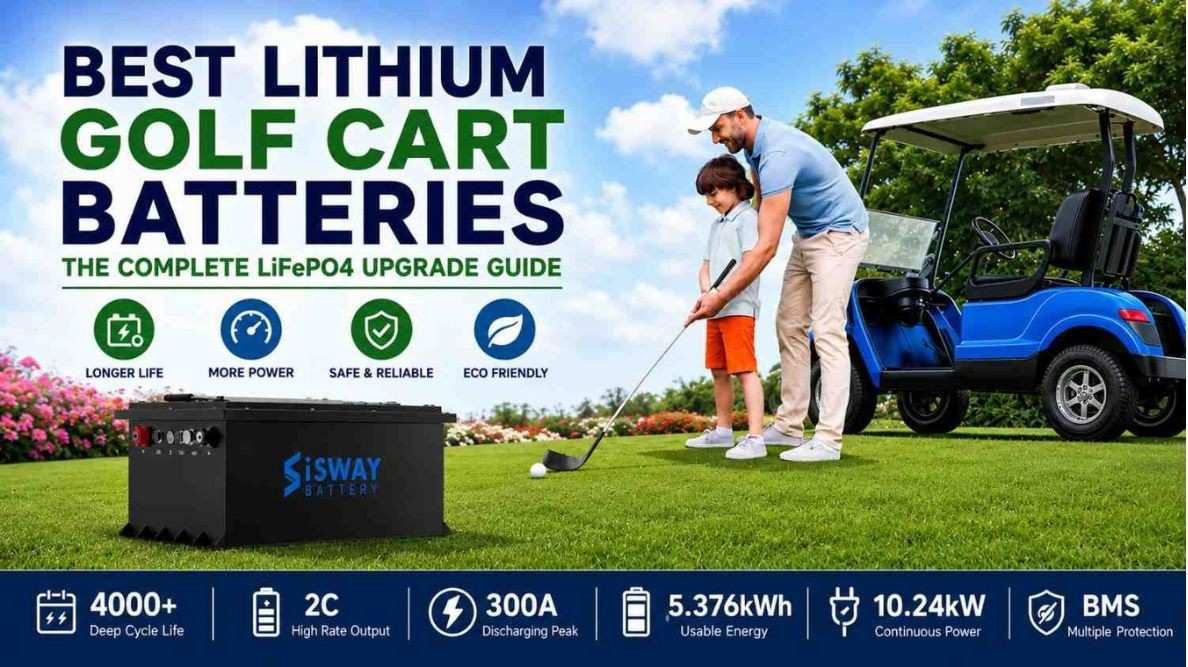
LiFePO4 chemistry delivers nearly 95% usable energy vs. only 50% in lead-acid. More miles, fewer stops.
Over 4,000 deep charge cycles compared to just 300–500 for conventional lead-acid alternatives.
Reach a full charge in just 2–4 hours. Lead-acid requires 8–12 hours plus a cool-down period.
No watering, no acid checks, no corrosion cleanup. Install once and enjoy worry-free operation.
Less weight means less strain on your cart’s frame, improved acceleration, and better hill-climbing.
Every pack includes a Battery Management System protecting against overcharge, over-discharge, and short circuit.
Why LiFePO4 Technology Is the Gold Standard
Not all lithium batteries are created equal. LiFePO4 (Lithium Iron Phosphate) golf cart batteries use iron-phosphate chemistry that is fundamentally safer, more stable, and longer-lasting than standard lithium-ion (NMC or NCA) alternatives used in many consumer electronics. As a result, LiFePO4 has become the preferred chemistry for high-demand applications like golf carts.
Furthermore, LiFePO4 chemistry delivers a flat voltage discharge curve, meaning your cart maintains consistent power from the first hole to the last — no frustrating power fade at the end of a round.
No thermal runaway risk — safe even in hot summer conditions on the course.
No lead, no acid, no toxic disposal headaches. Cleaner for you and the environment.
Flat discharge means stable speed and torque throughout your entire ride.
Compatible Cart Brands & Applications
Our certified LiFePO4 battery range is engineered as a direct drop-in replacement for existing lead-acid setups. No rewiring or major modifications needed. Confirmed compatible brands include:
Beyond the golf course, lithium golf cart batteries also power LSVs (Low Speed Vehicles), electric utility carts, airport ground vehicles, resort shuttles, and industrial sightseeing trains. In other words, if it runs on 36V, 48V, 60V, 72V, or 96V — there’s a lithium solution for it.
The Technical Side: How It All Works
A LiFePO4 golf cart battery pack consists of individual prismatic or cylindrical lithium iron phosphate cells connected in series and parallel to achieve the target voltage and capacity. Each pack is paired with a Battery Management System (BMS) that actively monitors:
- ⬡ Cell voltage balancing
- ⬡ Temperature management
- ⬡ Overcharge/over-discharge protection
- ⬡ Short circuit & overcurrent cutoff
The result is a self-protecting, intelligent energy source. Sisway Battery packs are certified to UN38.3, CE, and RoHS standards, manufactured under ISO 9001 quality management, and tested at the factory before dispatch.
Lithium vs. Lead-Acid Golf Cart Battery: Full Comparison
Still on the fence? This side-by-side breakdown makes the choice crystal clear. As you’ll see, lithium outperforms lead-acid in every meaningful category:
| Feature | Lithium (LiFePO4) | Lead-Acid |
|---|---|---|
| Cycle Life | 4,000+ cycles | 300–500 cycles |
| Weight | 50–70% lighter | Heavy |
| Usable Capacity | ~95% | ~50% |
| Charge Time | 2–4 hours | 8–12 hours |
| Maintenance | None required | Regular water/acid checks |
| Self-Discharge Rate | 1–2% / month | 5–15% / month |
| Thermal Safety | Excellent (no runaway) | Risk of gas/explosion |
| Total Cost of Ownership | Lower long-term | Higher (frequent replacement) |
Lithium Golf Cart Battery Buying Guide
Choosing the right lithium golf cart battery means matching voltage, capacity, and build quality to your specific needs. Consequently, there are five key factors every buyer should evaluate before purchasing:
Most carts use 36V, 48V, 60V, 72V, or 96V. Check your existing battery configuration or consult your cart’s manual before ordering.
Higher Ah = longer range. For standard 18-hole rounds, 100Ah is typically sufficient. For heavy-duty or commercial use, consider 150Ah–200Ah or more.
A built-in, smart BMS is non-negotiable. It protects your investment and dramatically extends the pack’s life.
Only buy from manufacturers with UN38.3, CE, and RoHS certification. These are indicators of real quality control and international safety compliance.
Choose suppliers shipping from US stock to avoid long wait times and import complications. Sisway Battery ships directly from US warehouses for fast domestic delivery.
Maintenance Tips for LiFePO4 Golf Cart Batteries
One of the biggest advantages of LiFePO4 batteries is how little upkeep they need. Nevertheless, following these simple best practices will help you get the absolute most out of your investment:
- Avoid full discharge — try not to let the battery drop below 10% regularly, even though the BMS provides protection.
- Use a compatible lithium charger — never charge a LiFePO4 battery with a lead-acid charger. The voltage profiles are different and will damage the cells.
- Store at 50–80% charge if you won’t be using the cart for an extended period, such as over winter.
- Keep terminals clean and dry — inspect connections annually and tighten any loose terminals to prevent resistance buildup.
- Charge after every use — unlike lead-acid, lithium cells have no “memory effect,” so you can charge after every round without worry.
Frequently Asked Questions About Lithium Golf Cart Batteries
Conclusion
The evidence is overwhelming: lithium golf cart batteries — and LiFePO4 technology in particular — are the superior choice for any cart owner who values performance, reliability, and long-term savings. Specifically, from 10× longer cycle life and 50% less weight to zero maintenance and faster charging, the advantages are too significant to ignore.
Whether you’re upgrading a personal cart for weekend rounds or outfitting a fleet for a commercial resort, choosing our certified LiFePO4 cart battery range from a trusted manufacturer is the smartest investment you can make for your cart. The technology has matured, the prices are competitive, and consequently, the benefits speak for themselves.
Ready to Power Up Your Golf Cart?
Explore our complete range of certified LiFePO4 golf cart batteries — available in 36V, 48V, 60V, 72V, and 96V configurations. Ships from our US warehouse. OEM/ODM available.
Shop Lithium Golf Cart Batteries →UN38.3 · CE · RoHS Certified | ISO 9001 Facility | Fast US Shipping