
36V Lithium Golf Cart Battery
If you still use lead-acid batteries, upgrading to a 36V lithium golf cart battery is a smart choice. It eliminates common problems such as slow charging, voltage drop, and regular maintenance. You no longer need to add water or perform equalization.
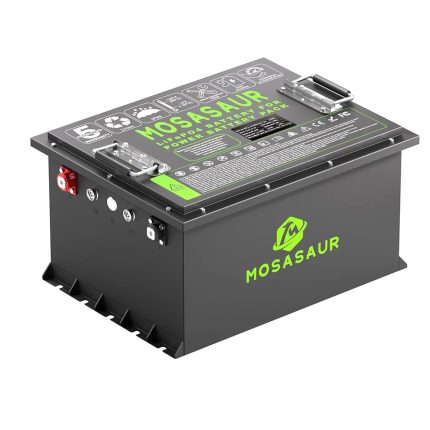
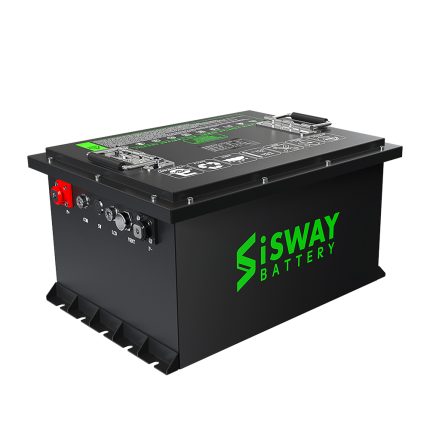
Sisway 36V LiFePO4 golf cart batteries fit directly into the same battery tray as your old 36-volt battery. They deliver stable power from the first mile to the last. The battery also charges much faster, so you spend less time waiting and more time driving.
These batteries weigh about one-third as much as a comparable lead-acid battery bank. The lighter weight improves handling and reduces stress on your golf cart’s drivetrain. An advanced Battery Management System (BMS) protects the battery and keeps performance reliable.
With up to 4,000 deep charge cycles, Sisway batteries last far longer than traditional lead-acid batteries. Most owners replace two or three lead-acid battery sets during the lifespan of one lithium battery. That makes it a cost-effective investment for long-term performance.
Showing all 2 results
Why Choose a 36V Lithium Golf Cart Battery
A 36 volt golf cart battery bank has to do more work than it gets credit for — it powers the motor, the lights, the controller, and on newer carts, onboard electronics, all while sitting through heat, vibration, and constant charge cycles. Lead-acid packs were the default for decades simply because there wasn't a practical alternative. That's changed. A lithium golf cart battery built on LiFePO4 chemistry handles that same workload with less weight, less maintenance, and a dramatically longer service life, which is why golf courses, fleet operators, and individual cart owners have been steadily switching over the past few years. The appeal isn't just about specs on a page — it's about what changes day to day. Carts accelerate more consistently because lithium doesn't sag under load the way lead-acid does. Charging goes from an overnight commitment to a couple of hours. And the battery compartment stops being something you have to think about, since there's no water to check and no terminals to clean.Benefits Over Lead-Acid Batteries
Weight and Handling
A comparable lead-acid bank for a 36V cart can weigh well over 100 lbs. Our lithium battery for golf cart applications typically comes in at a third of that. Less weight in the battery compartment means better weight distribution, less strain on tires and suspension, and a cart that simply feels more responsive — especially noticeable on hilly courses or uneven terrain.Maintenance-Free Operation
Lead-acid batteries need regular watering, terminal cleaning, and equalization charges to stay healthy. Skip any of that and capacity drops fast. A maintenance-free golf cart battery removes all of it — there's nothing to top off, nothing to corrode, and no scheduled upkeep beyond normal charging.Consistent Power Delivery
Lead-acid voltage drops steadily as the battery discharges, which means a cart gets noticeably slower toward the end of a charge. A 36V lithium battery holds a flat voltage curve through most of its discharge cycle, so performance on the last hole feels the same as the first.Performance and Driving Range
Range depends on terrain, load, and driving habits, but lithium's usable capacity advantage is real: lead-acid batteries are typically only safe to discharge to 50% depth of discharge before damage sets in, while LiFePO4 cells handle 80–100% depth of discharge without shortening their lifespan. In practical terms, a 100Ah lithium battery delivers considerably more usable range than a lead-acid battery rated at the same amp-hours, simply because you can actually use more of that capacity.Charging Efficiency
A fast charging golf cart battery isn't just a convenience feature — it changes how a cart gets used. Lead-acid packs generally need 8+ hours for a full charge and shouldn't be fast-charged without risking damage. Our 36V lithium packs accept significantly higher charge rates and typically reach full charge in 2–4 hours with a compatible charger, with no risk of overcharge damage thanks to the onboard BMS cutting off charging once cells reach full capacity. If you're pairing this battery with an existing lead-acid charger, note that most lead-acid chargers use a charge profile that isn't suited to lithium cells long-term. We recommend a dedicated lithium-compatible charger for the best performance and longest battery life.Battery Lifespan and Total Cost of Ownership
This is where the numbers matter most for buyers comparing upfront price. A typical lead-acid golf cart battery lasts 1–3 years and 300–500 cycles before capacity degrades to the point of needing replacement. Our long life golf cart battery is rated for up to 4000 deep cycles — roughly 8–10 years of typical use. Over that same span, a lead-acid owner is buying replacement batteries two, sometimes three times over, plus dealing with the labor and downtime of each swap. When you run the numbers over a decade rather than a single purchase, lithium is very often the cheaper option, not the more expensive one.Safety Features and Smart BMS Protection
LiFePO4 is inherently one of the more thermally stable lithium chemistries available, which is part of why it's become the standard for golf cart and deep cycle lithium battery applications rather than higher-energy-density chemistries used in consumer electronics.Built-in Smart BMS
Every battery includes an integrated Battery Management System that continuously monitors cell voltage, temperature, and current. It protects against overcharge, over-discharge, short circuit, and overtemperature conditions automatically, and balances individual cells so the pack ages evenly over its service life. For OEM and fleet buyers, the BMS can also be configured with specific communication protocols (CAN bus, RS485, or Bluetooth monitoring) on request.Applications and Compatible Golf Cart Brands
Our 36V golf cart battery upgrade fits standard 36-volt battery trays used across most major golf cart platforms, including Club Car, EZGO, Yamaha, and other low-speed electric vehicles (LSVs) built around a 36V system. Beyond golf courses, these batteries are commonly used in:- Personal and fleet golf carts
- Resort, campus, and community LSV fleets
- Utility and turf carts
- Light industrial tow carts
Technical Specifications
| Spec | Detail |
|---|---|
| Nominal Voltage | 36V (38.4V for 100Ah / 105Ah models) |
| Capacity Options | 100Ah, 105Ah, 150Ah |
| Chemistry | LiFePO4 (Lithium Iron Phosphate) |
| Cycle Life | Up to 4000 cycles @ 80% DoD |
| BMS | Integrated smart BMS, configurable protocols |
| Charging | 2–4 hrs with compatible lithium charger |
| Customization | OEM/ODM voltage, capacity, and protocol options |
Maintenance Tips
One of the biggest advantages of switching is how little upkeep is required — but a few habits will help you get the full rated lifespan out of the battery:- Use a lithium-compatible charger — never a lead-acid charger meant for a different chemistry
- Store at roughly 50% charge if the cart will sit unused for more than a month
- Avoid charging or storing in extreme heat where possible
- Keep terminal connections clean and torqued to spec during installation
Buying Guide: Choosing the Right Capacity
Capacity choice comes down to how the cart is used. A 100Ah golf cart battery replacement is generally sufficient for standard personal and light fleet use. If you're running longer shifts, heavier loads, or accessories that draw continuously, the 105Ah or 150Ah options give you more usable range between charges. If you're not sure which fits your use case — or your cart runs a different voltage entirely — our 48V golf cart battery and 72V golf cart battery lines cover higher-voltage carts, and our team can help confirm the right match before you order. For distributors, fleet operators, and cart manufacturers, all models are available as OEM/ODM customizable builds — adjustable voltage, capacity, case dimensions, and communication protocol to match your specification.Installation Overview
Our 36V lithium batteries are built as drop-in replacements for standard 36-volt lead-acid banks, so in most cases installation doesn't require modifying the cart:- Disconnect and remove the existing lead-acid battery bank
- Confirm tray dimensions and terminal orientation match
- Install the lithium battery and secure it in the tray
- Connect terminals, double-checking polarity
- Switch to a lithium-compatible charger before the first charge