
Introduction
A forklift is only as dependable as the battery inside it. If your forklift battery fails mid-shift, the entire operation comes to a halt — and that costs time and money.
Picking the right forklift battery is not complicated, but it does require knowing what your operation actually needs. This guide breaks down the different battery types available in 2026, how to maintain them properly, how to charge them correctly, and how to keep your team safe around them.
Whether you run a single warehouse or a large factory floor, this guide will help you make the right call.
Learn more about industrial battery basics from Battery University
Explore more battery solutions at Sisway Battery
Differ What Is a Forklift Battery and Why Does It Matter ?
A forklift battery is the power source that drives the electric motor of a forklift. It stores electrical energy and releases it steadily to keep the machine running through a full shift.
The type and quality of the forklift battery you use affects how long a forklift runs per charge, how quickly it loses power under load, and how many years the battery lasts before it needs to be replaced. A poor battery choice leads to slower operations, more downtime, and higher replacement costs over time.
Getting this decision right from the start saves a lot of trouble later.
Types of Forklift Batteries
There are two main types of forklift batteries used in industrial settings today. Each one suits a different kind of operation.
Lead-Acid Forklift Batteries
Lead-acid batteries have been used in forklifts for over a century. They are the most common forklift battery option in warehouses and factories across the world.
They work by converting chemical energy into electrical energy through a reaction between lead plates and sulfuric acid. This process is reliable, cost-effective, and well understood.
What makes them a practical choice:
- Lower upfront purchase cost
- Easy to source and service almost anywhere
- Compatible with most standard industrial chargers
- Work well in normal indoor warehouse conditions
The one requirement with lead-acid batteries is regular maintenance. Water levels need to be checked frequently, and the battery needs periodic equalization charges to stay healthy. Without this, the battery degrades faster than it should.
Lead-acid batteries typically last 3 to 5 years with proper care.
Lithium-Ion Forklift Batteries
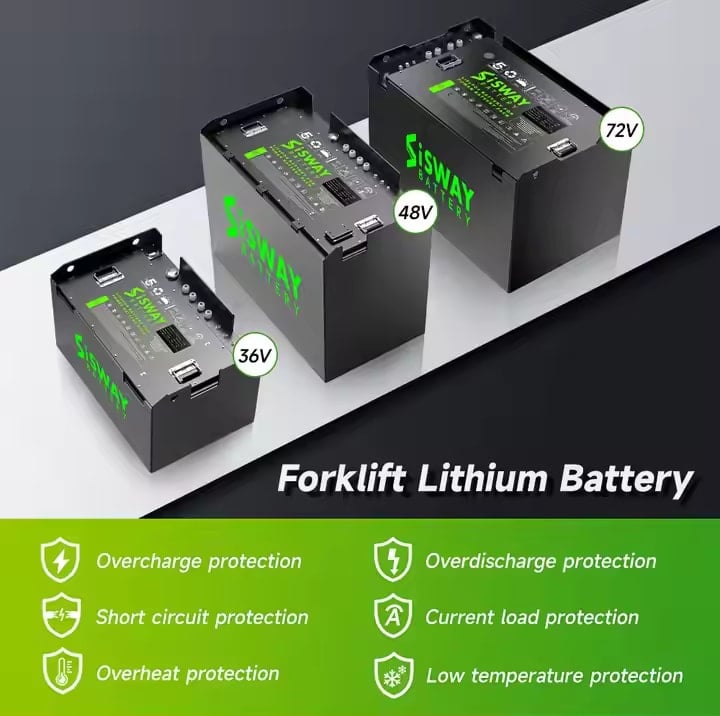
Lithium-ion forklift batteries have become much more common over the last few years. They offer significant advantages for operations that need higher productivity and less downtime.
Unlike lead-acid, lithium-ion batteries do not need watering or equalization. They charge faster, maintain a consistent power output throughout the entire shift, and last considerably longer.
What makes them worth considering:
- No maintenance required — zero watering or equalization
- Charges fully in 1 to 3 hours
- Supports opportunity charging during short breaks
- Delivers steady power from start to finish of every shift
- Lifespan of 5 to 10 years
The upfront cost is higher than lead-acid, but for multi-shift operations or high-volume facilities, the long-term savings on maintenance, energy, and battery replacement often make lithium-ion the more economical choice over time.
Explore Sisway Battery’s range of lithium-ion forklift batteries to find the right fit for your fleet.
Lead-Acid vs. Lithium-Ion: Side-by-Side Comparison
| Feature | Lead-Acid | Lithium-Ion |
| Upfront Cost | Lower | Higher |
| Lifespan | 3 to 5 years | 5 to 10 years |
| Maintenance | Regular (water + equalization) | None |
| Charge Time | 8 to 10 hours | 1 to 3 hours |
| Energy Efficiency | Around 80% | Around 99% |
| Best Suited For | Single-shift, budget-focused ops | Multi-shift, high-productivity ops |
How to Choose the Right Forklift Battery
The best forklift battery for your operation depends on several factors. There is no one-size-fits-all answer.
Voltage and Capacity Requirements
Start by checking the voltage your forklift requires. Common ratings are 24V, 36V, 48V, and 80V. The battery must match the forklift’s specifications exactly. Using the wrong voltage will damage the equipment.
Capacity, measured in amp-hours (Ah), determines how long the battery can run between charges. A higher Ah rating means longer run time per shift.
Shift Pattern and Usage Intensity
If your facility runs one shift per day, a lead-acid battery with overnight charging works perfectly fine. If you run two or three shifts, lithium-ion’s fast opportunity charging becomes a major advantage because you never have to swap batteries or wait hours for a full recharge.
Operating Environment
Temperature plays a role in battery performance. Standard lead-acid batteries perform best in normal indoor conditions. Lithium-ion batteries handle cold storage environments better and maintain more stable performance in fluctuating temperatures.
For harsh or outdoor environments, always look for batteries with appropriate IP ratings or protective housing.
Long-Term Cost
Consider the total cost of ownership, not just the purchase price. Add up the cost of maintenance, replacement parts, energy consumption, and lost productivity from downtime. Over a 5-year period, lithium-ion often costs less overall despite the higher starting price.
For help comparing options, speak with our team at Sisway Battery or browse our range of industrial battery solutions.
Forklift Battery Maintenance Tips
Taking care of your battery is the most reliable way to extend its life and avoid unexpected failures.
Lead-Acid Battery Maintenance
Consistent maintenance is what keeps a lead-acid battery healthy. Follow these practices every week:
- Check water levels after every 5 to 10 charge cycles and top up with distilled water only
- Never add water before charging — always check levels after a full charge
- Perform an equalization charge every 5 to 10 cycles to balance cell voltage
- Clean the battery top regularly to prevent buildup and corrosion
- Inspect all terminals and cable connections for corrosion or looseness
- Never discharge below 20 percent of remaining capacity
Skipping any of these steps shortens battery life significantly.
Lithium-Ion Battery Maintenance
Lithium-ion batteries are essentially maintenance-free, but a few checks help them stay in top shape:
- Inspect indicator lights on the Battery Management System (BMS) before each shift
- Keep connectors and cable ends clean and free from debris
- If storing the battery for an extended period, keep the charge level between 20 and 80 percent
- Update your smart charger’s firmware when the manufacturer releases updates
A quick visual inspection before each shift takes less than two minutes and can catch problems early.
How to Charge a Forklift Battery Correctly
Charging errors cause more battery failures than almost anything else. Following these steps protects your battery and extends its working life.
- Always use the charger designed for your specific battery type — a lead-acid charger must never be used with a lithium-ion battery
- Allow the battery to cool for at least 30 minutes after heavy use before connecting it to the charger
- Never interrupt a lead-acid charging cycle midway, as partial charging causes sulfation and reduces capacity over time
- Avoid overcharging — use a charger with an automatic shutoff feature
- Charge in a well-ventilated area, especially for lead-acid batteries, which release hydrogen gas during charging
- Always follow the charging instructions provided by the battery manufacturer
Using the right forklift battery charger from day one prevents most common charging-related failures.
How Long Does a Forklift Battery Last ?
Battery lifespan varies depending on how well it is maintained, how frequently it is used, and the conditions it operates in.
As a general reference:
- Lead-acid forklift batteries last 3 to 5 years, or approximately 1,500 charge cycles
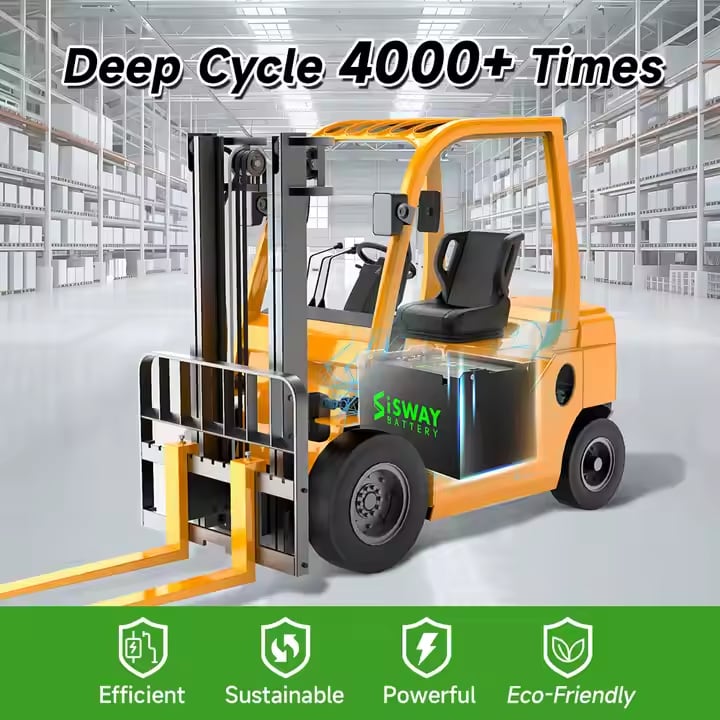
- Lithium-ion forklift batteries last 5 to 10 years, or more than 3,000 charge cycles
Batteries that are regularly overcharged, discharged too deeply, or poorly maintained rarely reach these figures. Batteries that are well cared for often exceed them.
If your battery no longer holds a meaningful charge, takes much longer to charge than it used to, or shows signs of swelling or leaks, it is time to replace it.
Forklift Battery Safety Guidelines
Battery safety is not optional. Forklift batteries are heavy, contain corrosive materials, and produce hydrogen gas during charging. Every team member who works near them should know the basic rules.
Key safety practices to follow:
- Always charge batteries in a space with adequate ventilation — never in a sealed room
- Wear acid-resistant gloves and safety goggles whenever handling lead-acid batteries
- Keep fire extinguishers accessible in all battery charging areas
- Never allow open flames, sparks, or smoking anywhere near batteries that are charging
- Use proper lifting equipment when moving or replacing batteries — they can weigh several hundred kilograms
- Inspect each battery for cracks, leaks, or swelling before use and remove it from service immediately if found
- Follow the safety procedures specific to your battery model as outlined by the manufacturer
For a full set of workplace battery safety standards, refer to the NFPA Battery Safety Guidelines.
Following these rules keeps your staff safe and keeps your operation running without incident.
Why Choose Sisway Battery ?
Sisway Battery manufactures forklift batteries built for real industrial conditions. Every product in the range is designed to perform consistently over a long service life, with safety certifications suited to demanding work environments.
The product range covers both lead-acid and lithium-ion options across a wide range of voltages and capacities, so there is a solution for almost every forklift model and operation type.
Beyond the product itself, the Sisway team provides genuine technical support to help you choose the right battery, set up the right charging system, and maintain your fleet correctly from day one.
Contact our team or browse the full product range at Sisway Battery to get started.
Frequently Asked Questions About Forklift Batteries
You should check the water level in a lead-acid forklift battery every 5–10 charge cycles. Always check after charging, not before. Use distilled water only and fill just below the indicator level to avoid overfilling.
No, lithium-ion forklift batteries require a compatible smart charger. These chargers communicate with the Battery Management System (BMS). Using the wrong charger can damage the battery and may void the warranty.
Lithium-ion forklift batteries are ideal for multi-shift warehouses. They support fast opportunity charging during breaks, eliminating the need for battery swapping or long charging cycles.
Signs include reduced runtime, difficulty holding charge, visible damage, and frequent maintenance needs. If performance drops significantly, it’s time to test or replace the forklift battery.
Yes, lithium-ion batteries offer long-term savings. They require less maintenance, charge faster, and last longer, making them cost-effective for medium to high usage operations.
Conclusion
Choosing the right forklift battery is one of the most practical decisions you can make for the long-term efficiency of your warehouse or factory. The right battery keeps your forklifts running reliably, reduces downtime, lowers maintenance costs, and supports a safer working environment.
Lead-acid batteries remain a solid, affordable option for single-shift operations with a structured maintenance routine. Lithium-ion batteries offer greater efficiency, zero maintenance, and a longer service life — making them the right choice for busier, multi-shift operations.
Whichever type you choose, consistent care and correct charging habits will always get you the most out of your investment.
To find the right forklift battery for your fleet, browse the full range at Sisway Battery or contact the team directly for expert guidance.