
Introduction :
Sourcing lithium batteries from China can save your business 30–60% compared to Western suppliers — but only if you know what to verify. One wrong choice in chemistry, certifications, or BMS quality can mean failed shipments, product recalls, or worse. This guide walks you through the 7 critical checkpoints every smart OEM buyer runs before placing an order.
According to global industry data from the International Energy Agency, lithium battery demand continues to grow rapidly across industrial and EV sectors
1. Verify the Battery Chemistry Matches Your Application
Not all lithium batteries are the same. The two most common chemistries for industrial and commercial OEM applications are LiFePO4 (Lithium Iron Phosphate) and NMC (Nickel Manganese Cobalt). Choosing the wrong one for your application is an expensive mistake.
LiFePO4 is the preferred choice for forklifts, golf carts, solar energy storage, marine, and any application where safety and cycle life matter most. It is inherently stable, has a lower risk of thermal runaway, and delivers 3,000–5,000+ charge cycles. NMC offers higher energy density but lower thermal stability — better suited for lightweight EVs and consumer electronics.
Sisway’s Recommendation
For industrial OEM buyers — forklifts, warehouse vehicles, solar ESS, and marine — always specify LiFePO4. The safety profile and lifespan far outweigh any energy density trade-off at these scale and duty cycles.
Checklist
- Specify the exact chemistry in your RFQ, not just “lithium battery”
- Ask for the cell chemistry datasheet, not just the pack spec sheet
- Confirm cycle life rating under your expected depth of discharge (DoD)
2. Confirm International Safety Certifications
This is the step most buyers skip — and the most costly one to get wrong. Batteries without proper certifications can be rejected at customs, flagged by freight carriers, or banned outright in your target market.
Before placing any order, request the actual certificate documents — not screenshots or logos on a website. Cross-check certificate numbers with the issuing body if possible.
Key Certifications to Request
- UN38.3 — required for all air and sea freight of lithium batteries internationally
- UL1642 or UL1973 — required for US market entry
- IEC62619 — the global industrial battery safety standard
- CE marking — required for European Union market entry
- MSDS / SDS — mandatory safety data sheets for transport compliance
Red Flag
If a supplier cannot provide original certification documents within 48 hours of request, treat this as a serious warning sign. Legitimate manufacturers keep these on file and share them readily.
3. Evaluate the Battery Management System (BMS)
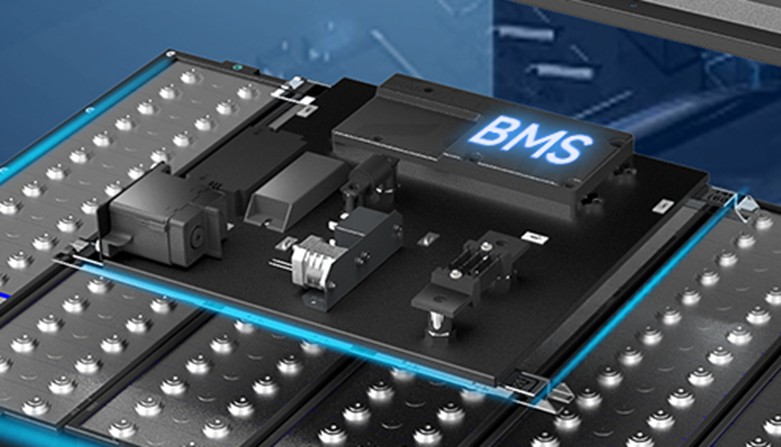
The BMS is the brain of every lithium battery. A poor-quality BMS is the most common source of battery fires, early failures, and voided warranties. It is also the component most commonly downgraded by low-cost suppliers to cut margins.
A proper industrial-grade BMS should protect against overcharge, over-discharge, overcurrent, short circuit, and over-temperature — and should do so reliably under your actual operating conditions, not just lab conditions.
BMS Checklist
- Ask for the BMS brand and model number — not just “integrated BMS”
- Confirm the continuous discharge current rating matches your use case
- Check if Bluetooth monitoring or LCD display is available for fleet use
- Verify operating temperature range covers your environment (especially cold storage)
4. Inspect the Cell Brand and Source
The lithium cells inside the battery pack are the single biggest driver of quality and longevity — yet they are also the most frequently substituted component by budget manufacturers. A supplier may quote you a price based on Grade-A cells and ship Grade-B or even refurbished cells once the order is placed.
Reputable OEM manufacturers partner with top-tier cell makers and are transparent about their cell supply chain. Look for batteries using cells from established producers such as EVE, CATL, BYD, or Lishen, and get written confirmation of the cell source in your purchase agreement.
What to Ask Your Supplier
“Can you provide the cell manufacturer name, model number, and Grade-A certification for the cells used in this order?” Any hesitation or vague answers here should prompt closer scrutiny.
5. Understand OEM vs ODM — and Which You Actually Need
Many buyers use OEM and ODM interchangeably, but they are fundamentally different business models that affect your cost, timeline, and flexibility.
OEM (Original Equipment Manufacturer) means the factory manufactures a battery to your exact design specifications — your IP, your design, their production. ODM (Original Design Manufacturer) means the factory designs and manufactures the battery, and you rebrand and sell it. ODM is faster, cheaper, and lower-risk for most small and mid-volume buyers.
Checklist
- If your volume is under 500 units, ODM is almost always the better path
- Confirm MOQ (Minimum Order Quantity) for both standard and custom specifications
- Clarify IP ownership in writing if you are providing proprietary pack design
- Ask if the factory can handle custom branding, labeling, and packaging
6. Check Factory Capacity and Lead Times
A manufacturer who cannot reliably deliver on time is a liability, not an asset. Many buyers discover too late that their supplier is a trading company (middleman) rather than an actual factory — meaning longer lead times, less control over QC, and higher prices.
Request a virtual or in-person factory audit before your first large order. Legitimate manufacturers welcome this. Also confirm production capacity relative to your order volume — a small workshop cannot consistently produce 10,000 units per month regardless of what the sales rep says.
Checklist
- Ask for the factory’s monthly production capacity in units and MWh
- Confirm standard lead time for your product (typically 10–30 days for OEM runs)
- Verify delivery terms: FOB, EXW, or CIF — each carries different risk and cost
- Request references or case studies from existing OEM clients
7. Review Warranty, After-Sales, and Support Terms
A battery is a long-term investment. Problems rarely surface in the first month — they emerge 12 or 24 months into a product’s life. A supplier with no meaningful after-sales commitment is passing all that risk directly onto you and your customers.
The best Chinese OEM battery manufacturers offer multi-year warranties, dedicated after-sales teams, and clear replacement or refund procedures for defective units. Make sure these terms are written into the contract — verbal promises during the sales process carry no weight.
Industry Standard
For LiFePO4 industrial batteries, a credible manufacturer should offer at minimum a 2-year warranty on packs and clear defect rate guarantees (typically below 0.5% for Grade-A cell builds).
Checklist
- Get warranty duration and coverage terms in writing before signing
- Confirm the process for defective unit claims — replacement or credit?
- Ask if a dedicated account manager or technical support engineer is assigned to your account
- Verify response time commitments — Sisway Battery guarantees a response within 30 minutes
The Bottom Line
Sourcing OEM lithium batteries from China is one of the most effective ways to build a competitive, high-margin product — but the gap between a great supplier and a costly mistake is real. Running through these 7 checkpoints before your first order protects your business, your customers, and your reputation.
At Sisway Battery, we manufacture LiFePO4 battery solutions for forklifts, golf carts, solar storage, marine, and industrial applications — with full OEM/ODM support, certified globally, and backed by over a decade of manufacturing experience.
Ready to place your first OEM order ? Contact Sisway Battery today: www.siswaybattery.com
OEM lithium batteries from China are batteries manufactured by Chinese factories based on your brand’s specifications, design, and requirements, often at lower costs compared to Western suppliers.
Yes, it is safe if you verify certifications like UN38.3, UL, and IEC standards, and choose a reputable manufacturer with proper quality control and BMS systems.
LiFePO4 (Lithium Iron Phosphate) is considered the best for most industrial applications due to its safety, long cycle life, and thermal stability.
You can verify a supplier by checking certifications, reviewing factory audits, confirming cell brands (like CATL or BYD), and asking for real client references.
OEM means the battery is made according to your custom design, while ODM means the manufacturer provides a ready-made design that you can rebrand and sell.