
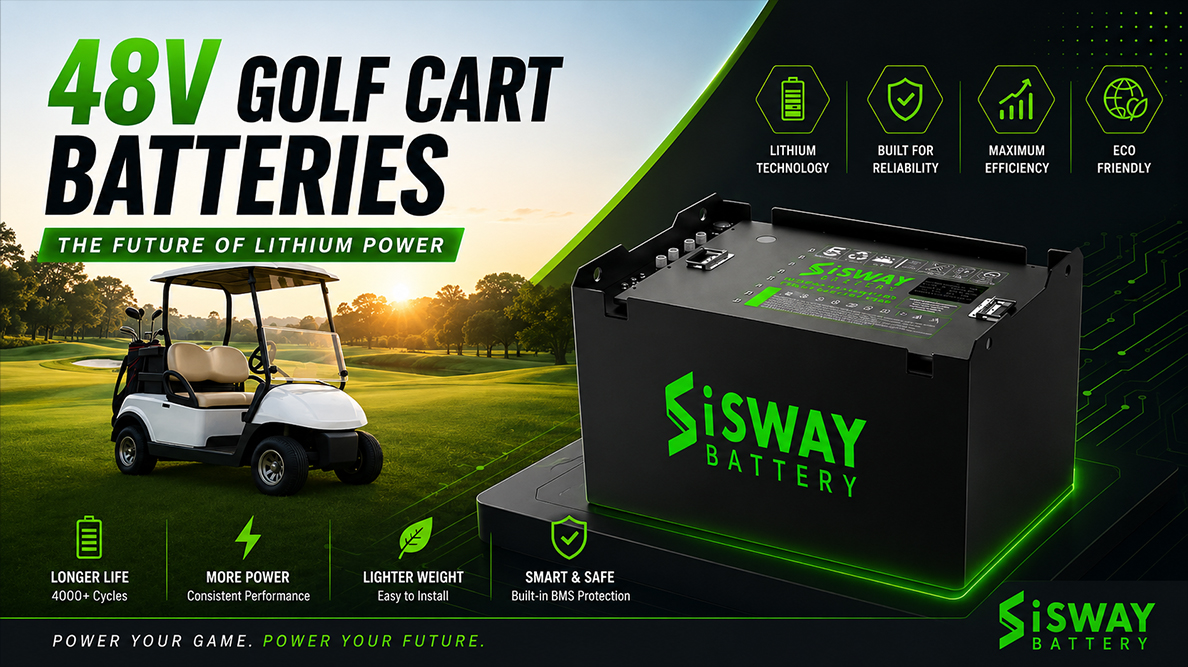
48V golf cart batteries are no longer a niche upgrade — they have become the new standard for anyone who takes performance seriously. Walk into any golf course, gated community, or resort property today, and you’ll find carts doing far more than ferrying golfers between holes. They haul equipment, transport guests, and patrol large properties.
For years, the industry relied on flooded lead-acid batteries. They did the job, but they were heavy, temperamental, and high-maintenance. Then 48V lithium-ion technology arrived and raised the bar significantly. This article explores where that technology stands today, where it is headed, and what it means for cart owners and fleet operators alike.
Why 48V Became the Benchmark for Golf Cart Power
Not all voltage systems are created equal. When manufacturers began moving from 36V to 48V systems, it was a fundamental rethinking of how these vehicles should perform. A 48V battery system delivers noticeably more torque on inclines, handles heavier loads without straining the motor, and operates more efficiently over longer distances.
In addition to raw power, it also works seamlessly with modern accessories — GPS units, USB charging ports, enhanced lighting systems — that a 36V setup often struggles to support cleanly. According to the U.S. Department of Energy, higher-voltage electric systems consistently demonstrate better energy efficiency and reduced heat generation, which is precisely why 48V has become the preferred standard.
Lead-Acid vs. 48V Lithium Golf Cart Batteries — The Honest Comparison
Lead-acid batteries have been around since the 1800s. Lithium-ion, by contrast, has improved dramatically over the past decade — in energy density, safety, and cost. As noted by the International Energy Agency, lithium battery costs have fallen by more than 90% over the last fifteen years. Here’s how the two technologies compare today:
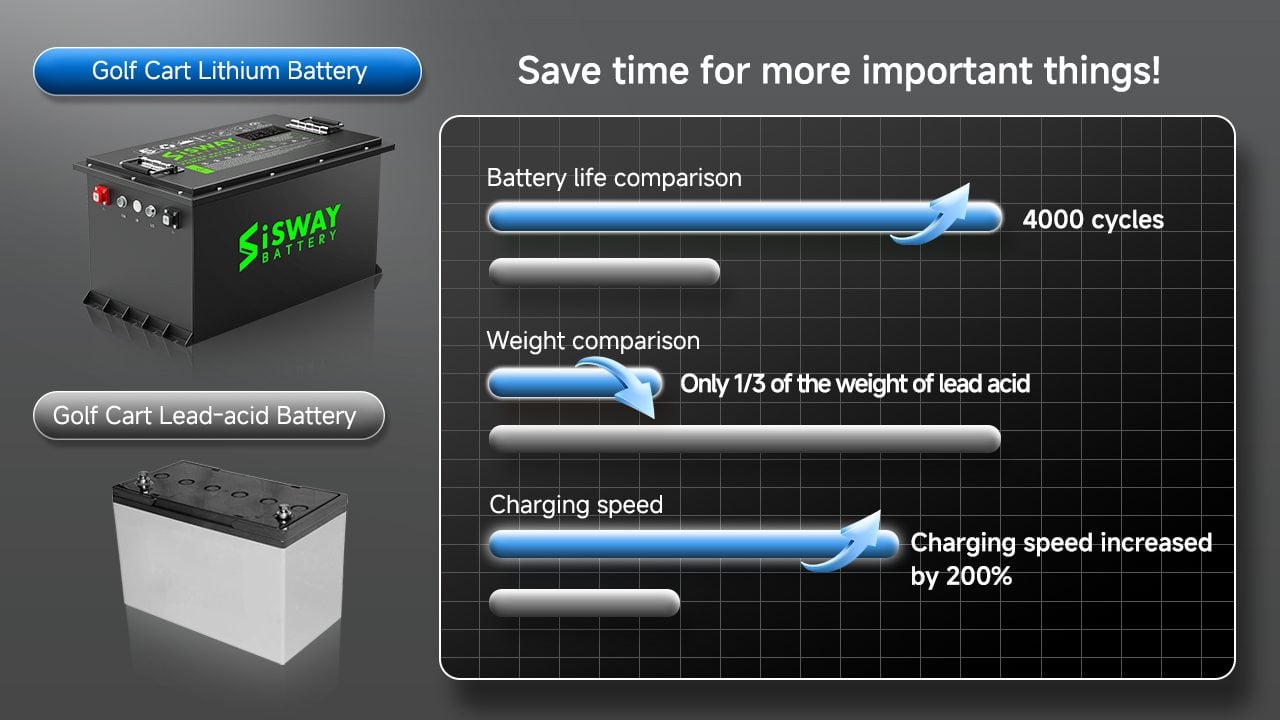
| Feature | Lead-Acid | 48V Lithium Golf Cart Battery |
|---|---|---|
| Weight | 60–70 lbs per battery | Up to 70% lighter |
| Expected Lifespan | 2–4 years | 8–10+ years |
| Charge Time | 8–12 hours | 2–4 hours |
| Maintenance | Regular watering required | Zero maintenance |
| Usable Capacity | ~50% per cycle | 80–100% per cycle |
| Environmental Impact | Lead disposal concerns | Clean & recyclable |
“The upfront price of lithium is no longer the obstacle it once was. What owners are realizing is that lead-acid was never actually cheap — it was simply deferred expense.”
Five Trends Shaping the Future of 48V Golf Cart Batteries
The 48V lithium battery is already impressive. Nevertheless, the trajectory of development points to something even more capable. Below are the five shifts that will define the next generation of golf cart power.
LiFePO4 Chemistry: The Safest 48V Battery Technology
Lithium Iron Phosphate (LiFePO4) is becoming the preferred chemistry for 48V golf cart batteries. Unlike earlier NMC cells, LiFePO4 operates within a much safer thermal range, doesn’t overheat under heavy load, and holds its capacity remarkably well over thousands of charge cycles.
Smart BMS: Intelligent Battery Management
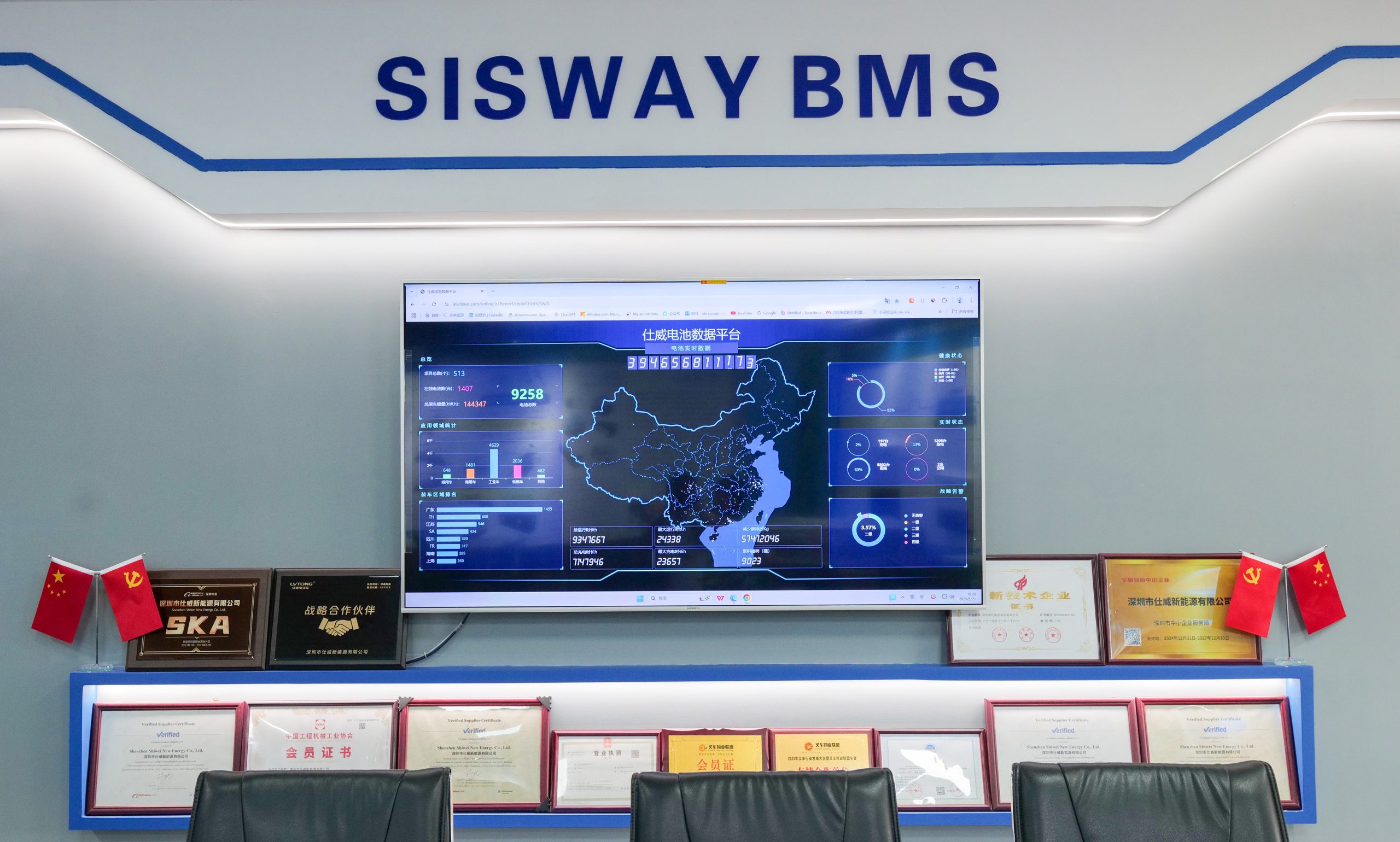
The Battery Management System built into modern 48V lithium batteries actively monitors cell voltages, regulates temperature, prevents overcharge and deep discharge, and balances cells to ensure even wear. Bluetooth-enabled BMS units that pair with smartphone apps are now giving owners real-time visibility into battery health.
Faster Charging Without Compromise
New charger designs that communicate with the battery’s BMS can optimize charge curves in real time. Some configurations are already bringing full charge times under two hours without any sacrifice to battery longevity, opening up new possibilities for off-grid or low-infrastructure charging locations.
The Green Mandate Accelerating Adoption
Golf courses pursuing sustainability certifications, municipalities with clean transport policies, and eco-conscious resorts are all replacing legacy lead-acid fleets. As highlighted by the U.S. EPA, improper lead-acid disposal remains a significant environmental concern — one that switching to lithium eliminates entirely.
Falling Costs Make Lithium More Accessible
Global expansion of battery manufacturing capacity, improvements in production efficiency, and intensifying competition have pushed lithium prices down substantially. For fleet operators making replacement decisions right now, the math already works in lithium’s favor, even without waiting for further price reductions.
Where 48V Golf Cart Batteries Are Making a Real Difference
The applications for high-performance 48V golf cart lithium batteries extend well beyond the golf course itself.
⛳ Golf Courses and Country Clubs
Consistent power delivery across an entire 18-hole round — even on hilly terrain — with no mid-round voltage drop. Fewer carts are pulled out of service, which means more available on busy weekends.
🏘 Gated Communities and HOA Streets
Daily-use carts covering several miles per day benefit enormously from lithium’s deep discharge capability and fast recharge. Residents enjoy more range and no tedious maintenance routines.
🏨 Resorts and Hospitality Properties
Guest-facing fleets need to look good and run quietly. The near-silent discharge cycle creates a noticeably more pleasant experience in noise-sensitive environments.
🏭 Warehouses and Light Industrial Sites
Utility vehicles running full eight-hour shifts without a charging break are far more productive. A single 48V lithium pack can handle a complete workday in conditions that would leave lead-acid struggling before mid-afternoon.
🌾 Agricultural and Rural Properties
The ruggedness of LiFePO4 chemistry and its compatibility with solar charging make it a practical fit for remote property use where grid power may be limited.
What to Look for When Choosing a 48V Golf Cart Battery
Not all 48V golf cart batteries are equivalent. When evaluating options, the details that matter most are chemistry stability, BMS sophistication, thermal management design, warranty terms, and drop-in compatibility with your specific cart model.
LiFePO4 Chemistry
Prioritize thermal stability and long cycle life over raw energy density. Safety and longevity matter far more than marginal weight differences between cell types.
Integrated Smart BMS
Cell balancing, over-discharge protection, and temperature monitoring should all be built in — not bolted on as a third-party add-on.
Drop-in Compatibility
Confirm the battery fits your cart’s battery tray dimensions and matches the voltage profile without requiring rewiring or structural modifications.
Warranty and Support
A credible manufacturer stands behind the product. Look for meaningful cycle-life warranties and responsive customer support before committing.
Frequently Asked Questions
Quick answers to the most common questions about 48V golf cart lithium batteries.
Can I replace my lead-acid batteries with a 48V lithium battery without rewiring?
How long does a 48V lithium golf cart battery last?
Do I need a special charger for a 48V lithium battery?
Is a 48V lithium battery safe in hot weather?
What is the total cost advantage of lithium over lead-acid?
The Future of 48V Golf Cart Batteries Is Already Here
Battery technology doesn’t evolve in isolation. The improvements happening in the EV sector, in grid storage, and in consumer electronics all feed directly into the golf cart space. 48V lithium golf cart batteries are among the most direct beneficiaries of that global investment.
According to the National Renewable Energy Laboratory, lithium-ion battery energy density continues to improve year over year — which means the technology available today will keep getting better.
The battery you buy today is already significantly better than what was available five years ago. However, the window in which early adopters gain a real operational and financial advantage over those still running lead-acid is open right now. Every season spent waiting represents unnecessary maintenance costs, reduced range, and inferior performance that simply doesn’t have to be accepted.
In short: the future of 48V golf cart batteries is not a distant promise — it is already here. The only question worth asking is whether you are ready to be part of it.
Ready to Upgrade Your 48V Golf Cart Battery?
Sisway Battery builds 48V lithium golf cart batteries engineered for real-world performance — drop-in compatible, intelligently managed, and built to last a decade of daily use.
Shop 48V Lithium Golf Cart Batteries Visit siswaybattery.com to learn more →